

Literacy and Reading: What Educators Are Noticing Right Now (and What Helps)
By Author Lisa Caprelli
As we move into a new season, I keep hearing the same message from teachers, librarians, and school leaders: literacy and reading are at the forefront 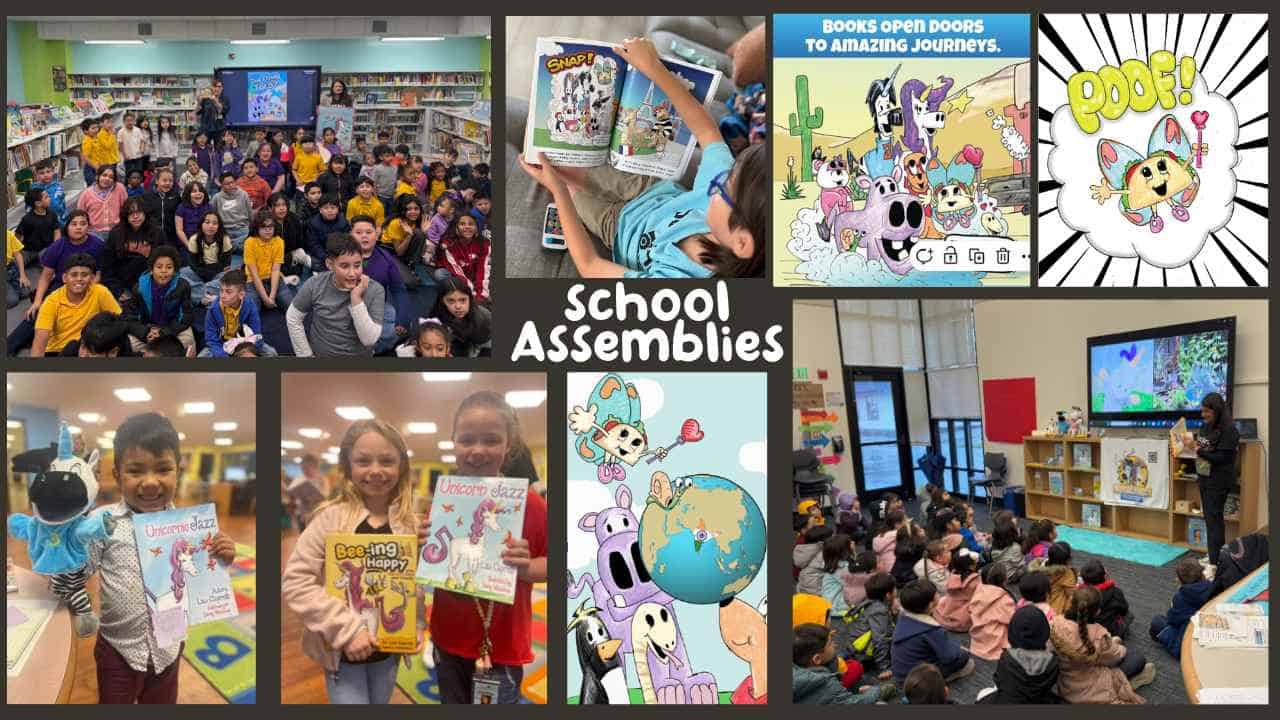 Colorful library scenes with kids reading and attending my educational programs.
right now.
This is not about fear. It’s about focus.
When we understand what’s affecting reading skills, we can respond with practical support that helps students become confident readers. Below are the biggest literacy trends educators are noticing and the simple reading strategies that can make a meaningful difference at school and at home.
1) Reading stamina is lower, and reading feels harder for many students
Educators are noticing that many students have a tougher time sustaining attention during independent reading. Longer texts can create quick fatigue, frustration, or shutdown.
Why it matters for literacy:
Reading stamina supports reading comprehension. When students cannot stay with a text, understanding breaks down.
What helps:
-
Build stamina with short, consistent reading time (even 10 minutes a day)
-
Choose “just right” books (not too easy, not too hard)
-
Celebrate small wins to rebuild confidence
2) Foundational reading skills need stronger support
Many teachers are seeing increased need for support in early literacy and foundational reading skills, including phonemic awareness, phonics, decoding, and reading fluency.
Why it matters for reading:
When students struggle to decode words, comprehension becomes exhausting. The brain is working so hard to “get the words” that it has little energy left to understand the meaning.
What helps:
-
Clear, explicit reading instruction
-
Practice that is systematic and supportive
-
Frequent review of skills so students can feel success faster
3) Vocabulary development is a major key to reading comprehension
A student can read every word on a page and still not understand what they read if their vocabulary is limited.
Why it matters for literacy education:
Vocabulary development is one of the strongest predictors of reading comprehension. Words are the bridge to meaning.
What helps:
-
During read-aloud time, pause for 2 to 3 important words
-
Give a simple definition and use the word in a sentence
-
Encourage kids to use new words in conversation
4) Attendance and chronic absenteeism are affecting literacy growth
Educators are connecting the dots between missed school days and stalled reading progress. Reading instruction depends on consistent practice and routine.
Why it matters for reading skills:
Reading development is cumulative. When students miss repeated instruction and guided practice, gaps widen quickly.
What helps:
-
Treat attendance as a literacy strategy
-
Support routines that make mornings smoother
-
Encourage consistent reading at home on days students miss school
5) The “science of reading” is changing reading instruction in many classrooms
More schools are leaning into research-based reading instruction, often described as the science of reading. You may also hear “structured literacy” in this conversation.
Why it matters for literacy:
This approach emphasizes the building blocks of reading: phonics, fluency, vocabulary, and comprehension. It helps students learn reliable tools rather than guessing.
What helps:
-
Align classroom practices to evidence-based reading strategies
-
Communicate clearly with families about how reading is taught
-
Make practice simple and consistent at home
6) Dyslexia awareness and early screening are expanding
More educators are prioritizing early identification of dyslexia and using reading intervention approaches that support struggling readers.
Why it matters for literacy support:
Early support reduces shame and prevents years of frustration.
What helps:
-
Earlier screening and targeted reading intervention
-
Structured literacy practices that teach decoding and spelling patterns clearly
-
A message to students that difficulty is not failure
7) Reading motivation is down, and reading for pleasure is declining
Many educators are noticing that fewer students read for fun. When reading becomes only “work,” it stops being a habit.
Why it matters for literacy development:
Reading for pleasure builds volume, vocabulary, comprehension, and confidence. Joy fuels practice.
What helps:
-
Let kids choose books that match their interests
-
Include graphic novels, humor, short books, and high-interest topics
-
Make reading social: book swaps, book clubs, or family read-aloud nights
8) Digital literacy is growing, but deep reading still needs practice
Online reading is constant now, but educators are noticing differences in attention and comprehension when students read on screens versus paper.
Why it matters for reading comprehension:
Digital reading often encourages scanning. Deep reading requires slowing down, rereading, and thinking.
What helps:
-
Balance digital reading with print reading
-
Teach students to pause and summarize
-
Encourage “close reading” habits like highlighting key ideas or asking questions
9) AI tools are entering literacy classrooms, and critical reading matters more than ever
Students are using AI tools for ideas, summaries, and writing support. That makes reading comprehension and critical thinking essential.
Why it matters for literacy and learning:
If students cannot evaluate information, they can be misled or over-rely on tools that shortcut growth.
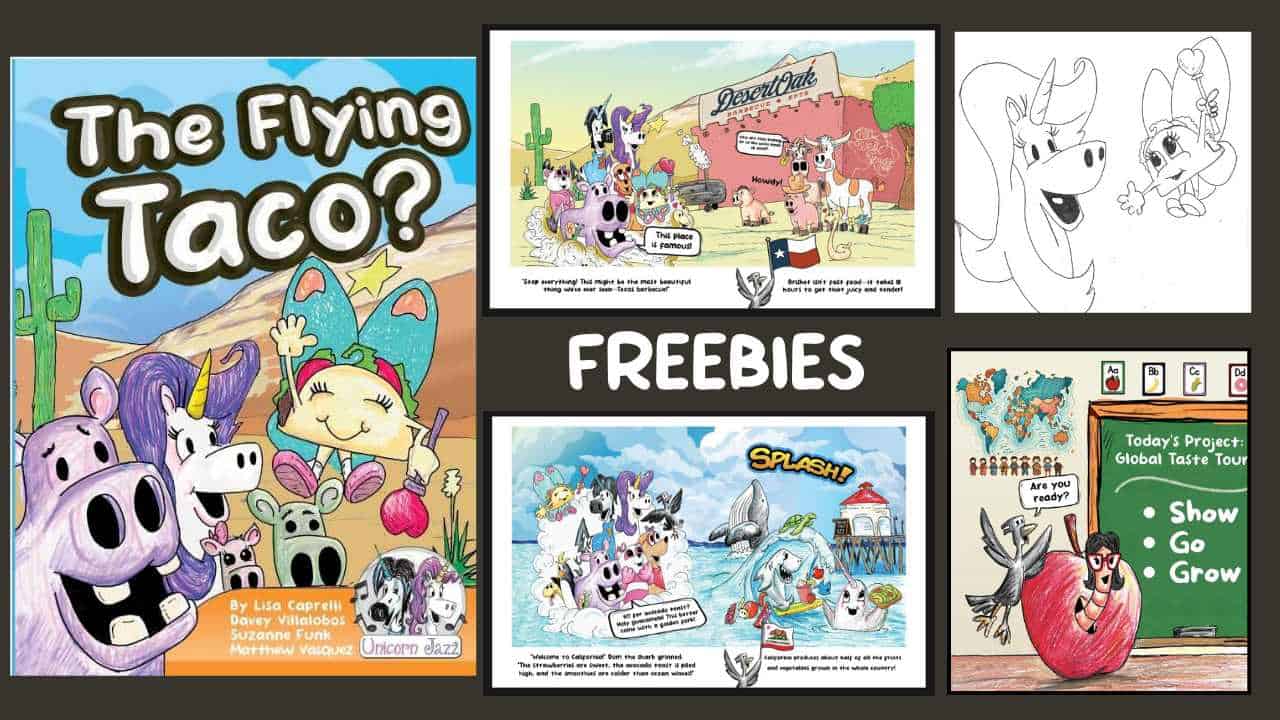
Unicorn Jazz children’s book illustrations showcasing playful unicorn characters, colorful scenes, and educational activities with free downloadable resources for kids’ learning and fun.
What helps:
Teach three simple habits:
-
Verify: Where did this information come from?
-
Think: Does it make sense? What’s missing?
-
Explain: Can I say this in my own words?
10) Multilingual learners thrive with reading instruction plus oral language support
Educators are emphasizing that reading instruction works best when students also grow in speaking, listening, and vocabulary.
Why it matters for literacy education:
Language and literacy grow together. Conversation builds comprehension.
What helps:
-
Read aloud regularly
-
Encourage storytelling, discussion, and “tell me more” questions
-
Honor a child’s home language as an asset in learning
11) Access to books and family literacy habits matter more than ever
Schools cannot carry literacy alone. When kids have access to books and consistent reading routines at home, reading skills grow faster.
Why it matters for literacy development:
Access creates opportunity. Routines create growth.
What helps:
-
Library visits and library cards
-
Classroom lending libraries and book swaps
-
A simple daily reading routine that feels doable
A Simple Literacy and Reading Reset for the New Year
If you want a realistic plan that supports reading at home, start here:
-
Read 10 minutes a day (consistency beats intensity)
-
Add one read-aloud (yes, even for older kids)
-
Talk about the text (What did you notice? What surprised you?)
-
Teach 2 to 3 words each reading session for vocabulary development
-
Let kids choose books that rebuild reading motivation
-
Replace 10 minutes of scrolling with 10 minutes of reading
Here’s a question I love for families, classrooms, and communities:
What story are you carrying, and what story are you ready to write this year?
Because literacy is not just about school. It’s about confidence, connection, and opening doors one page at a time.
Lisa Caprelli
Optional SEO Add-On: Quick FAQ (great for Google snippets)
What are the most important reading skills for literacy?
Foundational skills (phonics and decoding), reading fluency, vocabulary development, and reading comprehension work together to build strong literacy.
How can families support reading at home?
Read 10 minutes a day, read aloud regularly, talk about what you read, and let kids choose books that interest them.
What is the science of reading?
The science of reading refers to a body of research on how people learn to read and which reading instruction practices help students build strong reading skills.
If you tell me your main audience (parents, educators, faith community, or general readers), I can tweak the intro, add a stronger call to action, and tailor the keywords to match exactly who you want to reach.
Austin Author Speaking at Govalle Elementary Austin ISD
https://youtu.be/HnwxlaT6Og8Govalle Elementary School, part of the Austin Unified School District in Austin, Texas is receiving a fun and educational school author visit with books, stories, music, and entertainment led by Unicorn Jazz creator Lisa Caprelli.
Unicorn Jazz Presents: THE FLYING TACO Book A Global Feast Tour
The Flying Taco Book | Unicorn Jazz® The Flying Taco™ Free Beyond the Book Curriculum, Coloring Pages, The Play, Art Contests & More By Author Lisa Caprelli We have lots of activities, coloring pages and curriculum BEYOND ALL BOOKS on Teachers Pay Teachers – or for the asking. OTHER UNICORN JAZZ BEYOND THE BOOKS, like Bee-ing Happy and EYE SEE
EPISD reading and literacy with author Lisa Caprelli | Dr Nixon Elementary
https://youtu.be/HnwxlaT6Og8 Dr. Nixon Elementary an EPISD school in El Paso, Texas is receiving a fun and engaging school visit with books, stories, music, and entertainment led by Unicorn Jazz creator Lisa Caprelli.
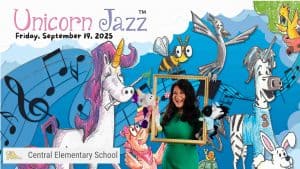
El Paso Author Brings SEL and Literacy Journey to Dolphin Terrace Elementary School
Central Elementary School loves to read and is having special guest speaker author to showcase the importance of reading back to school all day teacher learning community edutainment with all day assemblies
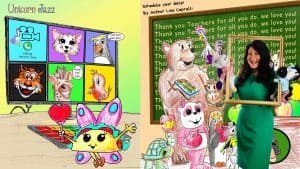
Social Emotional Learning Books for Children
Social Emotional Intelligence Books For Children and children’s well-being are important to parents, teachers and educators. SEL can be placed into 5 core competencies: self-management, self-awareness, social awareness, relationship skills, and responsible decision-making.
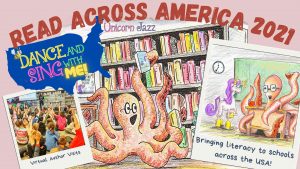
Read Across America Author Speaks to Schools Book Today
California Elementary schools want to book this special Read Across America Author Speaks to Schools Book 2026. This is an annual educational awareness month that serves to support active reading for young students of all grades and ages.